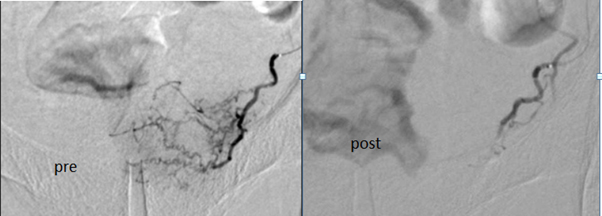
An enlarged prostate gland is a common problem in the geriatric age group, leading to lower urinary tract symptoms (LUTS), which can be stored (irritative) and voiding (obstructive). Although medical management with alpha-blockers is the first-line treatment option for BPH, transurethral resection of the prostate (TURP) is the gold standard treatment in symptomatic patients resistant to medical management. TURP is associated with complications like haemorrhage, urinary tract infections, transurethral resection (TUR) syndrome, urethral stenosis, urinary incontinence or retention, sexual dysfunction, retrograde ejaculation, and postoperative pain. Prostatic Artery Embolization (PAE) has emerged as a promising minimally invasive treatment option for a selected patient with BPH and moderate to severe lower urinary tract symptoms, that reduces prostate volume and improves clinical symptoms and quality of life with low rates complications like retrograde ejaculation, erectile dysfunction, and sphincter injury associated with surgical treatment.