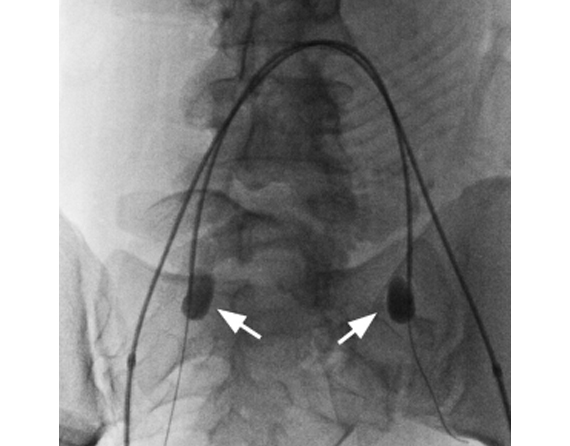
The term placenta accreta spectrum disorder (PASD) is used to describe the morbidly adherent placenta, which includes placenta accreta, increta, and percreta. In past decades, women increasingly preferred to deliver by cesarean section (CS), leading to the increasing incidence of placenta accrete spectrum (PAS). It is reported with an incidence of 1 per 533 pregnancies. One of the main and deadliest complications of PAS is massive bleeding. the average blood loss in these cases has been estimated to range between 2 and 3 liters. Additionally, the morbidly adherent placenta is the most common indication for peripartum hysterectomy, which is associated with high rates of morbidity and mortality. Therefore, strategies to prevent and treat bleeding are therefore critical. Various approaches have been employed in controlling intraoperative blood loss in cases of abnormal placentation, including inserting uterine tamponade balloons, applying uterine gauze packing, placing uterine brace or isthmic compression sutures, and performing a hysterectomy. The arterial occlusion balloon has been used in PAS recently, and the role of internal iliac artery (IIA) balloon occlusion to improve hemorrhagic outcomes in women with placenta accreta has been evaluated in many studies, which showed beneficially.